

In the dynamic world of projection technology, the compatibility of laser projector lenses with different laser sources is a topic that holds significant interest for both industry professionals and enthusiasts. As a leading supplier of Laser Projector Lenses, I've witnessed firsthand the curiosity and the importance of understanding this relationship. In this blog post, I'll delve into the science behind this compatibility, exploring the factors that determine whether a laser projector lens can be used with various laser sources.
Understanding Laser Projector Lenses and Laser Sources
Before we can discuss compatibility, it's essential to understand what laser projector lenses and laser sources are. A laser projector lens is a crucial optical component that focuses and shapes the laser beam emitted by the laser source. It plays a vital role in determining the quality of the projected image, including factors such as sharpness, clarity, and color accuracy.
On the other hand, laser sources are devices that produce coherent light through the process of stimulated emission. There are different types of laser sources, each with its own unique characteristics, such as wavelength, power output, and beam quality. Common types of laser sources used in projectors include solid-state lasers, gas lasers, and semiconductor lasers.
Factors Affecting Compatibility
Wavelength
One of the most critical factors affecting the compatibility of a laser projector lens with a laser source is the wavelength of the laser light. Different laser sources emit light at different wavelengths, which can range from ultraviolet (UV) to infrared (IR). The refractive index of the lens material varies with the wavelength of the light passing through it. This means that a lens designed for a specific wavelength may not perform optimally when used with a laser source emitting light at a different wavelength.
For example, a lens designed for a red laser (wavelength around 630 - 680 nm) may not focus the light from a blue laser (wavelength around 450 - 490 nm) accurately. This can result in a blurred or distorted image. Therefore, when considering using a laser projector lens with a different laser source, it's essential to ensure that the lens is designed to work within the wavelength range of the new laser source.
Power Output
The power output of the laser source is another important factor to consider. Laser projector lenses are designed to handle a certain amount of power. If a lens is used with a laser source that has a higher power output than the lens is designed for, it can cause the lens to overheat, leading to damage or a decrease in performance.
Conversely, if a lens is used with a laser source that has a lower power output, the lens may not be able to fully utilize the available light, resulting in a dimmer image. Therefore, it's crucial to select a lens that is compatible with the power output of the laser source.
Beam Quality
The beam quality of the laser source also plays a significant role in determining compatibility. Beam quality refers to the characteristics of the laser beam, such as its divergence, mode structure, and intensity profile. A lens is designed to work with a specific beam quality. If the beam quality of the laser source is significantly different from what the lens is designed for, it can affect the focusing ability of the lens and the quality of the projected image.
For example, a lens designed for a Gaussian beam (a common type of laser beam with a bell-shaped intensity profile) may not work well with a laser source that produces a multi - mode beam with a more complex intensity profile.
Compatibility in Practice
In some cases, it is possible to use a laser projector lens with different laser sources, especially if the differences in wavelength, power output, and beam quality are relatively small. For example, some high - quality lenses are designed to have a broad wavelength range, allowing them to work with multiple types of laser sources within a certain range of wavelengths.

However, in other cases, using a lens with an incompatible laser source can lead to significant problems. For instance, if a lens designed for a low - power laser is used with a high - power laser, the lens may be damaged due to excessive heat absorption. Similarly, if a lens designed for a specific beam quality is used with a laser source that produces a different beam quality, the projected image may be of poor quality.
Applications and Considerations
Projection Systems
In projection systems, the compatibility of the laser projector lens with the laser source is crucial for achieving high - quality images. For example, in Single Direct Laser LED Projector applications, the lens must be carefully selected to ensure that it can focus the laser beam accurately onto the projection surface, resulting in a sharp and clear image.
Laser Lighting
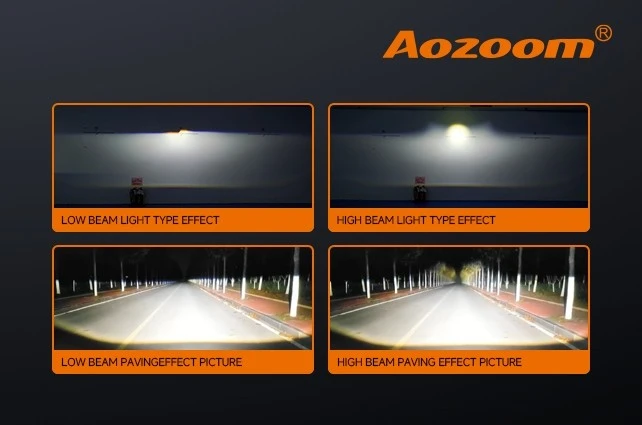
In the field of laser lighting, such as Laser LED Headlight and LED Laser Projector Driving Light applications, the compatibility of the lens with the laser source is also essential. A well - matched lens can help to optimize the beam pattern and intensity distribution of the laser light, providing better illumination and visibility.
Conclusion and Call to Action
In conclusion, while it is sometimes possible to use a laser projector lens with different laser sources, it is crucial to consider the factors of wavelength, power output, and beam quality. Ensuring compatibility between the lens and the laser source is essential for achieving optimal performance and avoiding damage to the lens or a decrease in image quality.
As a supplier of Laser Projector Lenses, we have a wide range of lenses that are designed to work with different types of laser sources. Our team of experts can provide you with detailed information and guidance on selecting the right lens for your specific application. If you are interested in purchasing high - quality laser projector lenses or have any questions about compatibility, please feel free to contact us for a consultation. We look forward to helping you find the perfect solution for your projection needs.
References
- Hecht, Jeff. Understanding Lasers: An Entry - Level Guide. Wiley, 2005.
- Saleh, Bahaa E. A., and Malvin Carl Teich. Fundamentals of Photonics. Wiley, 2007.


