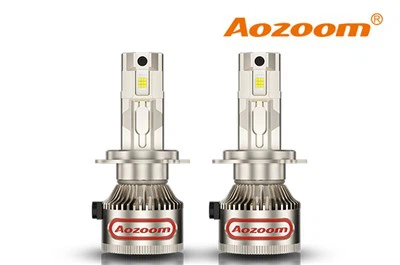

In the dynamic landscape of automotive lighting technology, LED laser projector headlights have emerged as a revolutionary advancement, offering unparalleled illumination and enhanced safety on the roads. As a leading supplier of LED Laser Projector Driving Light, LED Laser Projector Auxiliary Light, and Laser Light for Car Headlight, I am often asked about the self-diagnostic capabilities of these high-tech headlights. In this blog post, I will delve into the intricacies of self-diagnostic functions in LED laser projector headlights, exploring their importance, how they work, and the benefits they offer to drivers and vehicle manufacturers.
The Importance of Self-Diagnostic Functions
Self-diagnostic functions in automotive components have become increasingly important in recent years, driven by the need for enhanced safety, reliability, and efficiency. In the case of LED laser projector headlights, self-diagnostic capabilities play a crucial role in ensuring optimal performance and preventing potential issues that could compromise visibility and safety on the road.
One of the primary benefits of self-diagnostic functions is the ability to detect and alert drivers to potential problems with the headlights before they become serious. For example, if a laser diode fails or a cooling system malfunctions, the self-diagnostic system can detect the issue and notify the driver through a warning light on the dashboard. This early warning allows drivers to take prompt action, such as scheduling maintenance or replacing the faulty component, to avoid further damage and ensure the continued operation of the headlights.
In addition to improving safety, self-diagnostic functions can also help to reduce maintenance costs and downtime. By detecting and addressing issues early, vehicle manufacturers and maintenance technicians can avoid costly repairs and minimize the time that vehicles are out of service. This is particularly important for commercial vehicles, where downtime can have a significant impact on productivity and profitability.
How Self-Diagnostic Functions Work
Self-diagnostic functions in LED laser projector headlights typically rely on a combination of sensors, microcontrollers, and software algorithms to monitor the performance of the headlights and detect potential issues. These sensors can measure a variety of parameters, such as temperature, voltage, current, and light output, to ensure that the headlights are operating within normal limits.
For example, temperature sensors can monitor the temperature of the laser diodes and cooling system to ensure that they are not overheating. If the temperature exceeds a certain threshold, the self-diagnostic system can adjust the power output of the laser diodes or activate the cooling system to prevent damage. Similarly, voltage and current sensors can monitor the electrical performance of the headlights to detect any abnormalities, such as short circuits or power surges.
Once the sensors have collected the necessary data, the microcontroller analyzes the information using pre-programmed algorithms to determine if there are any potential issues. If a problem is detected, the microcontroller can generate an error code and send it to the vehicle's onboard diagnostic system, which can then display a warning light on the dashboard and provide additional information about the issue.
In some cases, the self-diagnostic system may also be able to perform self-repair functions, such as resetting the headlights or adjusting the power output to compensate for a minor issue. However, more serious problems may require the attention of a qualified technician.
Benefits for Drivers and Vehicle Manufacturers
The self-diagnostic functions in LED laser projector headlights offer a number of benefits for both drivers and vehicle manufacturers. For drivers, these functions provide peace of mind knowing that their headlights are being continuously monitored for potential issues. This can help to reduce the risk of accidents caused by poor visibility or malfunctioning headlights, particularly in adverse weather conditions or at night.
In addition, the early warning provided by the self-diagnostic system allows drivers to take prompt action to address any issues, which can help to prevent further damage and ensure the continued operation of the headlights. This can save drivers time and money by avoiding costly repairs and minimizing the time that their vehicles are out of service.
For vehicle manufacturers, self-diagnostic functions can help to improve the reliability and quality of their products. By detecting and addressing potential issues early, manufacturers can reduce the number of warranty claims and recalls, which can have a significant impact on their reputation and bottom line. In addition, the self-diagnostic data collected by the headlights can provide valuable insights into the performance and reliability of the product, which can be used to improve future designs and manufacturing processes.
Challenges and Limitations
While self-diagnostic functions in LED laser projector headlights offer many benefits, there are also some challenges and limitations that need to be considered. One of the main challenges is the complexity of the technology, which requires sophisticated sensors, microcontrollers, and software algorithms to operate effectively. This complexity can increase the cost of the headlights and make them more difficult to manufacture and maintain.
Another challenge is the accuracy of the self-diagnostic system. While the sensors and algorithms are designed to detect potential issues, there is always a risk of false positives or false negatives. False positives can lead to unnecessary maintenance and repairs, while false negatives can allow potential issues to go undetected, which can compromise safety and reliability.


In addition, the self-diagnostic system may not be able to detect all potential issues, particularly those that are caused by external factors such as damage from a collision or exposure to extreme temperatures. In these cases, additional diagnostic tools and techniques may be required to identify and address the problem.
Conclusion
In conclusion, self-diagnostic functions in LED laser projector headlights play a crucial role in ensuring optimal performance and preventing potential issues that could compromise visibility and safety on the road. These functions offer a number of benefits for both drivers and vehicle manufacturers, including improved safety, reduced maintenance costs, and enhanced reliability.
However, there are also some challenges and limitations that need to be considered, such as the complexity of the technology, the accuracy of the self-diagnostic system, and the ability to detect all potential issues. As a supplier of LED laser projector headlights, we are committed to addressing these challenges and developing innovative solutions to improve the performance and reliability of our products.
If you are interested in learning more about our LED laser projector headlights or would like to discuss your specific requirements, please do not hesitate to contact us. We would be happy to provide you with more information and assist you with your procurement needs.
References
- SAE International. (20XX). Recommended Practice for Automotive Lighting Systems.
- International Electrotechnical Commission (IEC). (20XX). Standards for LED Lighting in Automotive Applications.
- Society of Automotive Engineers of China (SAE-China). (20XX). Guidelines for Self - Diagnostic Systems in Automotive Components.